October 20, 2026

Blog
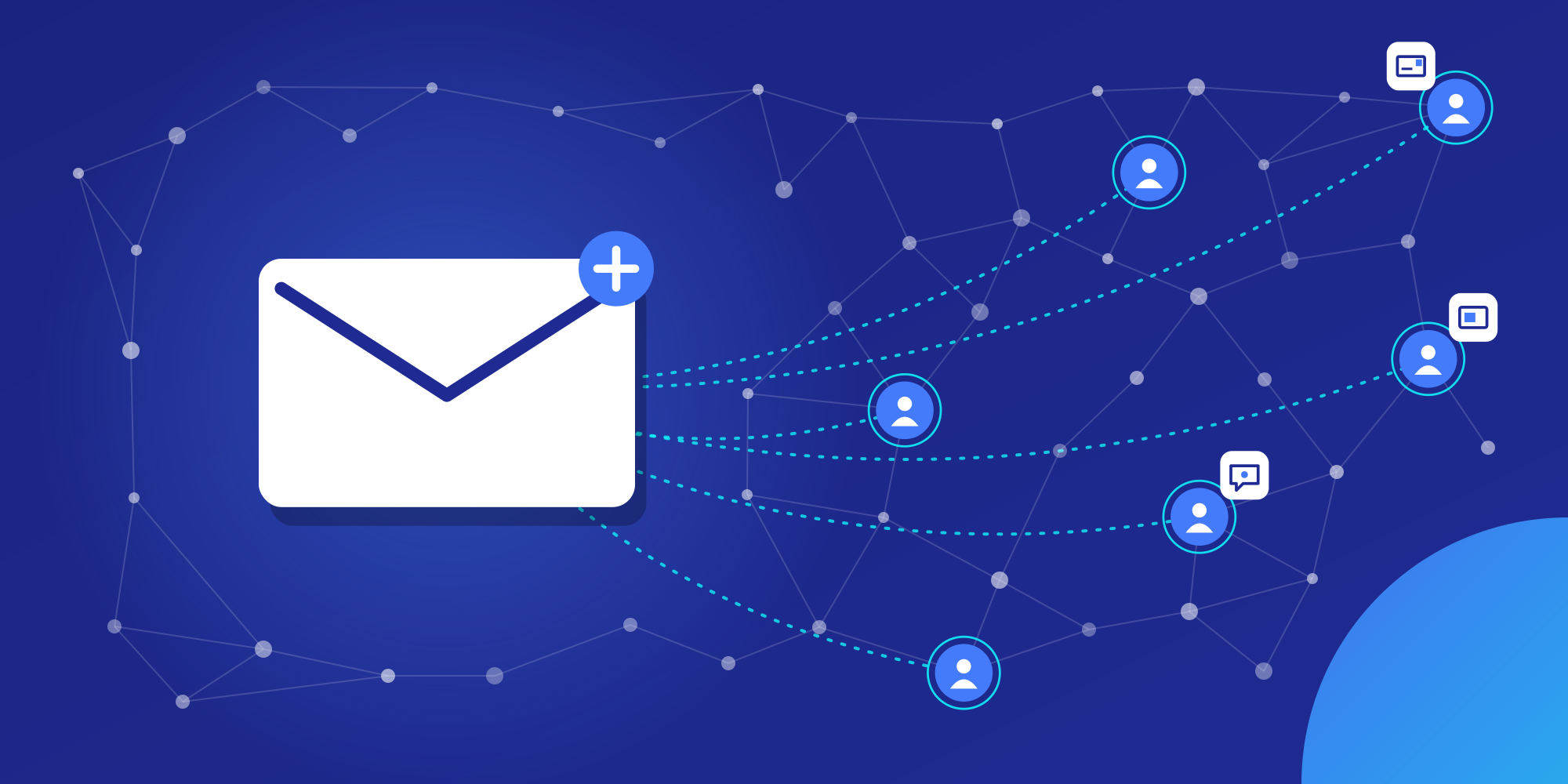


When most people think about email marketing, they think about reaching customers a company already has: announcing promotions, encouraging repeat purchases, and staying in touch with people who have signed up to hear from the brand.
Those are valuable uses of email, but messaging only current customers misses a significant opportunity. Email can also help brands reach consumers who have never purchased from them, visited their website, or subscribed to their mailing list.
Marketers focused on customer acquisition can use permission-based third-party audience data to introduce themselves to new consumers who fit their ideal customer profile.
The opportunity is particularly valuable for companies that need a more consistent way to reach people who may be interested in them. Email gives those companies a direct way to communicate with prospective customers while creating opportunities to measure engagement and eventual conversion.
A company's email database is usually built through previous purchases, website registrations, newsletter subscriptions, and other direct interactions that have established some relationship with the brand.
That makes an existing database useful for retention and nurturing, but it also creates a limitation for acquisition. Even a large customer database represents only a portion of the consumers who could potentially buy from the company.
A regional furniture retailer, for example, may have thousands of email addresses collected from past customers and website visitors. Those contacts can be valuable, but they do not include every homeowner in the area who might be shopping for a new sofa or dining room table.
The retailer could reach those prospective customers through paid search or social advertising. But it could also use consumer audience data to identify households that match its targeting criteria and reach them through email.
That gives the retailer an opportunity to introduce its brand before a consumer has searched for its name or visited its website.
For businesses trying to grow, reaching new audiences is essential. Email customer acquisition gives marketers another way to establish those initial connections.
Reaching people outside an existing database requires access to an audience that the brand has not collected on its own.
This is where third-party audience data becomes important.
Rather than sending campaigns to a broad collection of unfamiliar consumers, marketers can identify prospects using demographic information, geography, household characteristics, and relevant behavioral signals.
Consider a home services company entering a new market. Its ideal audience might consist of homeowners within a specific service area, particularly those living in properties that meet certain characteristics.
Or consider a regional automotive dealer promoting a new SUV. Its audience might include households in its surrounding market with income characteristics consistent with the vehicle's price point, along with available signals of automotive interest or purchase intent.
The objective is to identify people who have a reasonable likelihood of being interested in what the business offers. You don’t want to target too tightly, though.
More targeting criteria do not automatically make an audience better. A narrowly defined segment can become so restrictive that it excludes worthwhile prospects. Marketers need enough information to make the message relevant while maintaining sufficient reach to support their acquisition goals.
Site Impact’s Identity Graph helps brands and agencies build these audiences using consumer, household, and behavioral attributes, extending acquisition efforts well beyond existing first-party databases.
Email gives marketers more room to make an impression than many other digital advertising formats. A subject line can introduce an offer, while the message itself gives the brand space to explain its value and encourage a specific action. That flexibility is particularly useful in acquisition campaigns, where recipients may be encountering the brand for the first time.
A straightforward promotional offer might be enough to generate immediate interest, while a more considered purchase may warrant additional detail before asking someone to click through. Either way, the message can be built around a specific conversion goal.
Email also gives recipients the opportunity to engage on their own schedule. They can read the message, consider the offer, and return to it when they're ready to learn more. That doesn't guarantee a response, but it gives brands an opportunity to make an introduction that extends beyond a fleeting ad impression.
In acquisition campaigns, marketers need to communicate the value of an offer without relying on an existing relationship with the recipient. Marketers cannot assume recipients have enough familiarity with the brand to recognize its value immediately. The message needs to establish relevance quickly and provide a compelling reason to engage.
That makes it especially important to tailor the offer and the desired response to the audience being targeted. Even a well-targeted campaign can underperform when the creative assumes too much prior knowledge or asks for a commitment that the recipient is not ready to make.
The conversion goal should reflect where the consumer is in the buying process. An immediate purchase may be appropriate for a straightforward promotional offer, while a more considered decision may require an intermediate step that allows the prospect to explore the product or learn more about the company.
For acquisition-focused marketers, that initial response has value beyond the immediate conversion. It provides an early indication of consumer interest and creates an opportunity for continued engagement. A campaign that encourages the right prospects to take a meaningful first step can contribute to customer acquisition even when the purchase comes later.
Email can introduce a brand to prospective customers, but that first interaction may be one of several before a consumer converts. Marketers can increase their opportunities for engagement by coordinating email with other digital advertising channels.
Using a consistent audience definition across channels allows marketers to reach the same prospect segments through email, display, social, and programmatic advertising, where matching capabilities permit. It also provides more control over targeting than building separate audiences within each advertising platform, which may define and measure similar consumer segments differently.
For agencies managing acquisition campaigns across multiple platforms, this approach can make it easier to coordinate messaging and evaluate performance against a common audience strategy. Marketers can use what they learn from email engagement to inform subsequent advertising, while maintaining visibility among prospects who have expressed interest but have yet to convert.
The value comes from making those interactions more coordinated. Email can generate initial interest, while additional advertising provides opportunities to reinforce the message and encourage consumers to return when they are ready to take action.
Site Impact supports this approach with services that extend an email campaign to other channels. Marketers can add display or social retargeting to stay visible to prospects after the email send, or purchase the same audience as a postal file for direct mail or as hashed emails for matching through their own DSP. Because every channel starts from the same list, the audience definition stays consistent across the campaign. Explore our additional services.
Email engagement metrics provide useful information about campaign performance, but acquisition marketers ultimately need to know whether those interactions are producing new customers. A strong click-through rate means relatively little if the campaign generates few conversions or reaches consumers unlikely to purchase.
That requires evaluating performance against business outcomes. Depending on the campaign objective, those might include completed purchases, qualified leads, booked appointments, or other actions that indicate meaningful progress toward acquisition.
Marketers should also examine which audience segments are responsible for those conversions. Comparing results across segments can reveal differences in response that aggregate campaign metrics might obscure. A campaign may perform well overall while generating most of its conversions from a relatively small portion of the targeted audience.
When attribution or matchback capabilities are available, marketers can connect campaign exposure to subsequent customer activity, including conversions that occur after the initial email interaction. This provides a more complete view of performance and helps identify which audiences contribute most to acquisition.
Those findings can inform future investment decisions. Marketers can prioritize higher-performing segments, refine targeting criteria, and adjust offers based on demonstrated customer behavior rather than relying primarily on engagement metrics.
For acquisition marketers, the value of email comes down to whether it can contribute to a predictable flow of new business. That depends on two things: the quality of the audience data and how well campaign results inform the next decision.
Data quality deserves particular attention when reaching consumers outside an existing database. Marketers should know how recently records were updated, where the information originated, and whether consumers have provided appropriate permission to receive marketing messages.
From there, results guide the adjustments. Strong engagement with few conversions may mean the offer needs work, or that the audience is interested but not yet ready to buy. Segments that consistently outperform may justify more budget. Over time, each campaign makes the next one more productive.
Site Impact helps brands and agencies put this into practice. Its Identity Graph provides permission-based consumer data for building prospect audiences, and Email Enhanced combines email marketing with digital media to reach them. Add-on services such as display and social retargeting, postal files, and hashed emails extend the same audience to other channels, while measurement connects campaign activity to the results that matter.
Speak with our team today and see how Email Enhanced can work for you.
Read more insights on building effective campaigns through quality data and strategic audience engagement.

September 29, 2026
Why email creative decides what happens after the open

September 22, 2026
Holiday shopping now stretches across most of the fourth quarter. People begin researching and building lists in October, spending accelerates sharply around Thanksgiving, and a significant share of shoppers are still making decisions well into December.

Self-serve
White-label
200M+ consumers