.svg)


Consumers say personalized marketing knows too much and understands too little


77% of Americans detect personalized marketing constantly or often. Only 27% say brands actually understand what they want.
You searched for a pair of running shoes once. Three weeks later, they're still following you, across your feeds, into your inbox, down the sidebar of every article you open. The brand knows you looked. It doesn't seem to know you were never going to buy.
Brands have more data, more channels, and more automated tools than ever, and the promise was that all of it would add up to better experiences. Instead, consumers are often left with marketing that recognizes pieces of their behavior without showing a real understanding of what they want.
Purpose of this study
To understand how consumers experience personalized marketing in a data-driven advertising environment, Site Impact partnered with the third-party survey platform Pollfish in June 2026 to survey 800 U.S. adults ages 18 to 64 who regularly notice ads and marketing tailored to them.
The Site Impact 2026 Personalization Reality Check Report examines where consumers draw the line between personalization that feels useful and personalization that feels invasive. The report looks at how often consumers notice targeted ads, how well they believe brands understand their interests, what makes personalized marketing feel repetitive or too personal, and how consumers respond when brands get it wrong.
Key findings of the Site Impact 2026 Personalization Reality Check Report
- 77% of consumers notice personalized marketing constantly or often.
- Only 27% say brands understand their interests "very well."
- "Repetitive" is the most common word consumers use to describe personalized marketing, chosen by 45%, ahead of "relevant" (40%) and "helpful" (39%).
- Just 16% say personalized marketing has delivered on being more useful.
- 31% say personalized marketing is more relevant but also more invasive.
- 57% are retargeted with marketing for something they looked at once but never seriously considered buying.
- 55% feel uncomfortable when marketing references something specific about them.
- 61% react negatively to seeing the same brand's marketing across channels.
- 43% have stopped buying from a brand because its personalized marketing felt repetitive, too personal, or off-base.
- When personalized marketing does feel genuinely useful, 46% visit the brand's website and 42% consider buying.
Personalization is common. Feeling understood is not.
52% of consumers say brands either misunderstand what they want or don’t update what they know quickly enough.
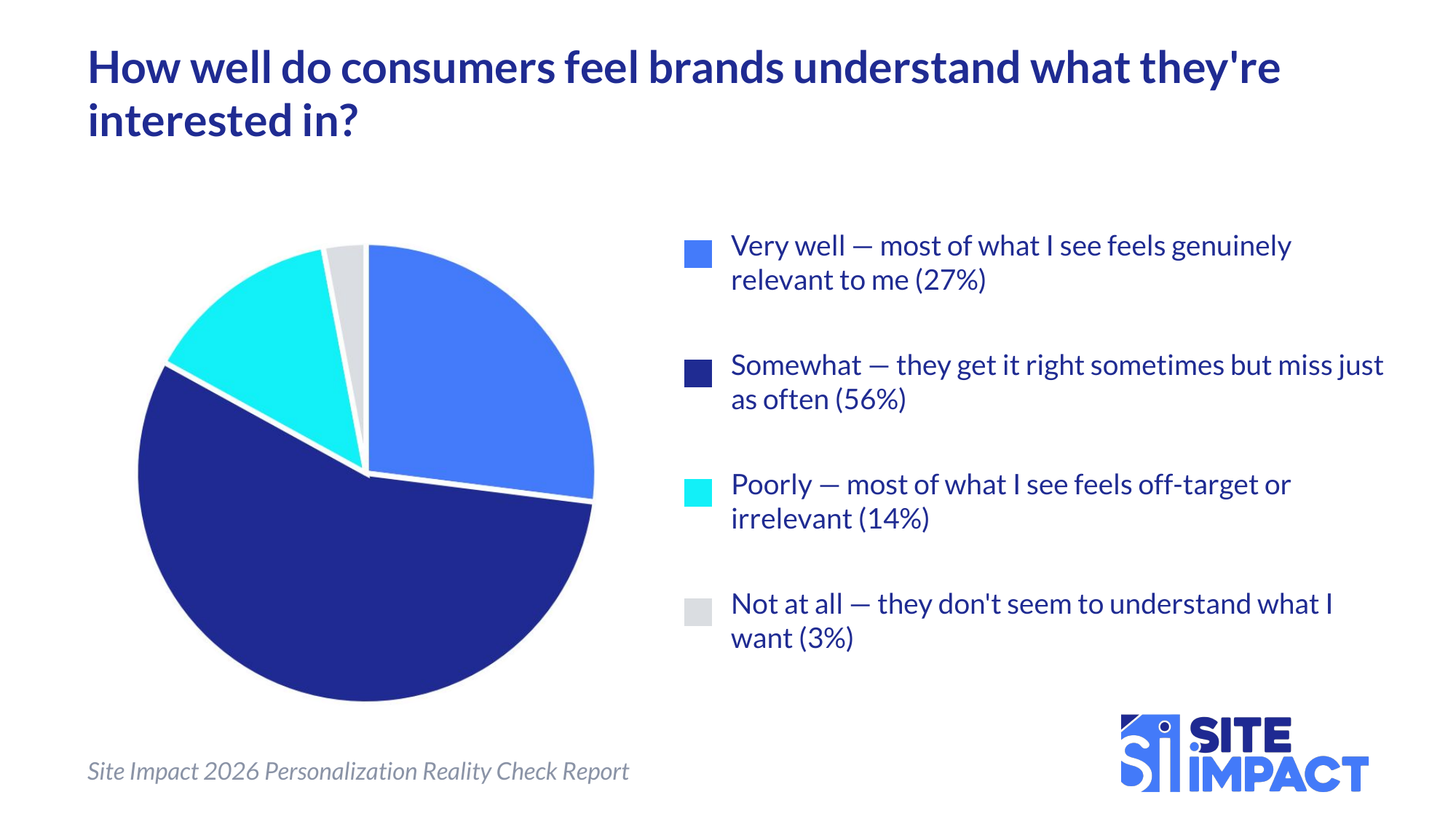
More than three-quarters of consumers notice personalized marketing built around their activity constantly (37%) or fairly often (40%). Only 27% say brands understand what they're interested in "very well."
A 56% majority say brands get it right sometimes but miss just as often, and 17% say brands understand them poorly or not at all.
The problem appears to be less about whether brands have consumer data and more about how accurately they interpret and update it. 52% say brands either misunderstand what they want or don't update what they know quickly enough.
The word consumers use most for personalized marketing is "repetitive"
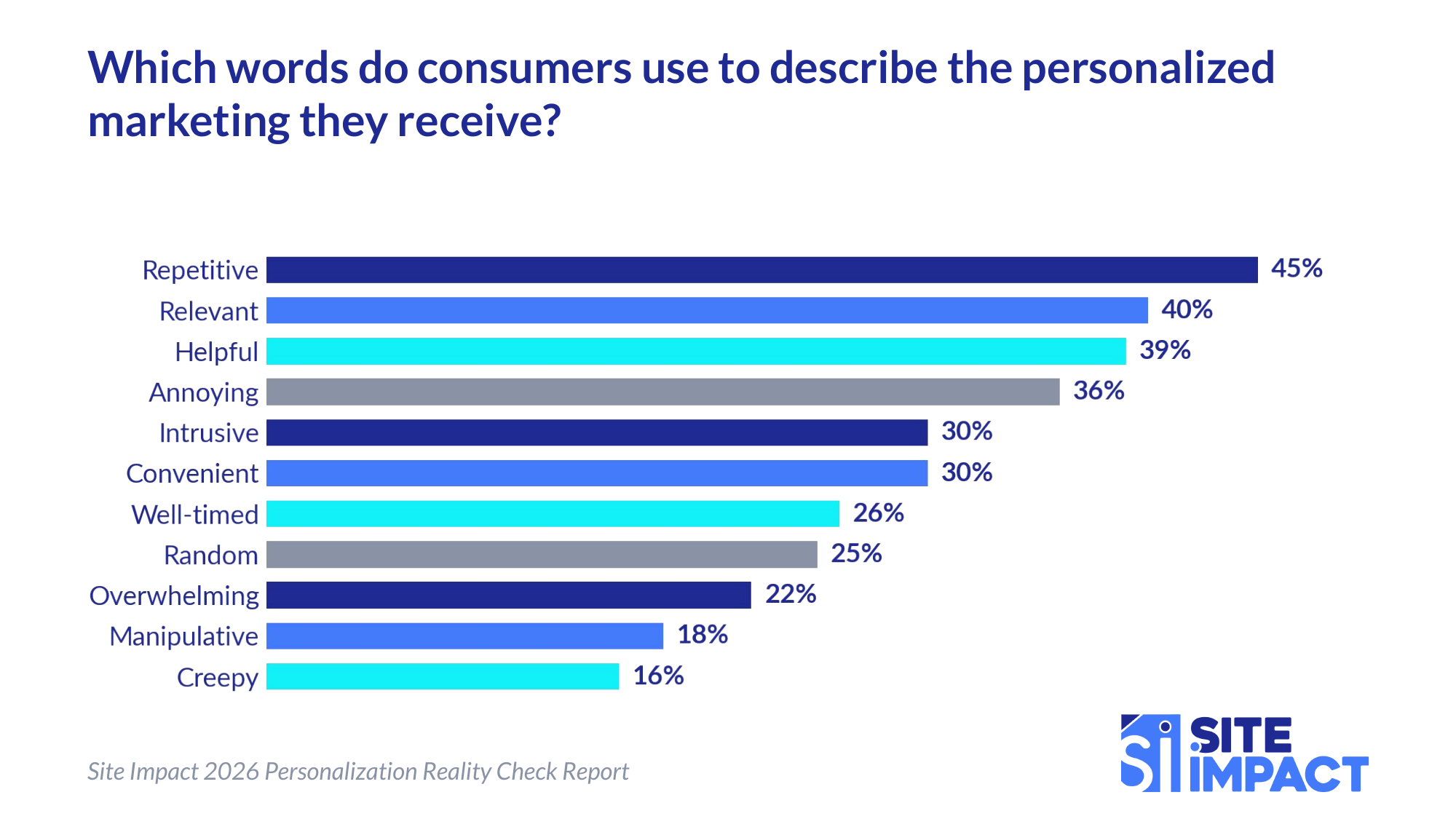
45% of consumers describe the marketing they receive as "repetitive.”
45% of consumers describe personalized marketing as "repetitive," more than "relevant" (40%) or "helpful" (39%). "Annoying" followed at 36% and "intrusive" at 30%.
Repetition is where personalization starts to show its limits: most brands know enough to keep showing up, but not enough to know when the message is no longer useful.
Retargeting is consumers' top personalization complaint
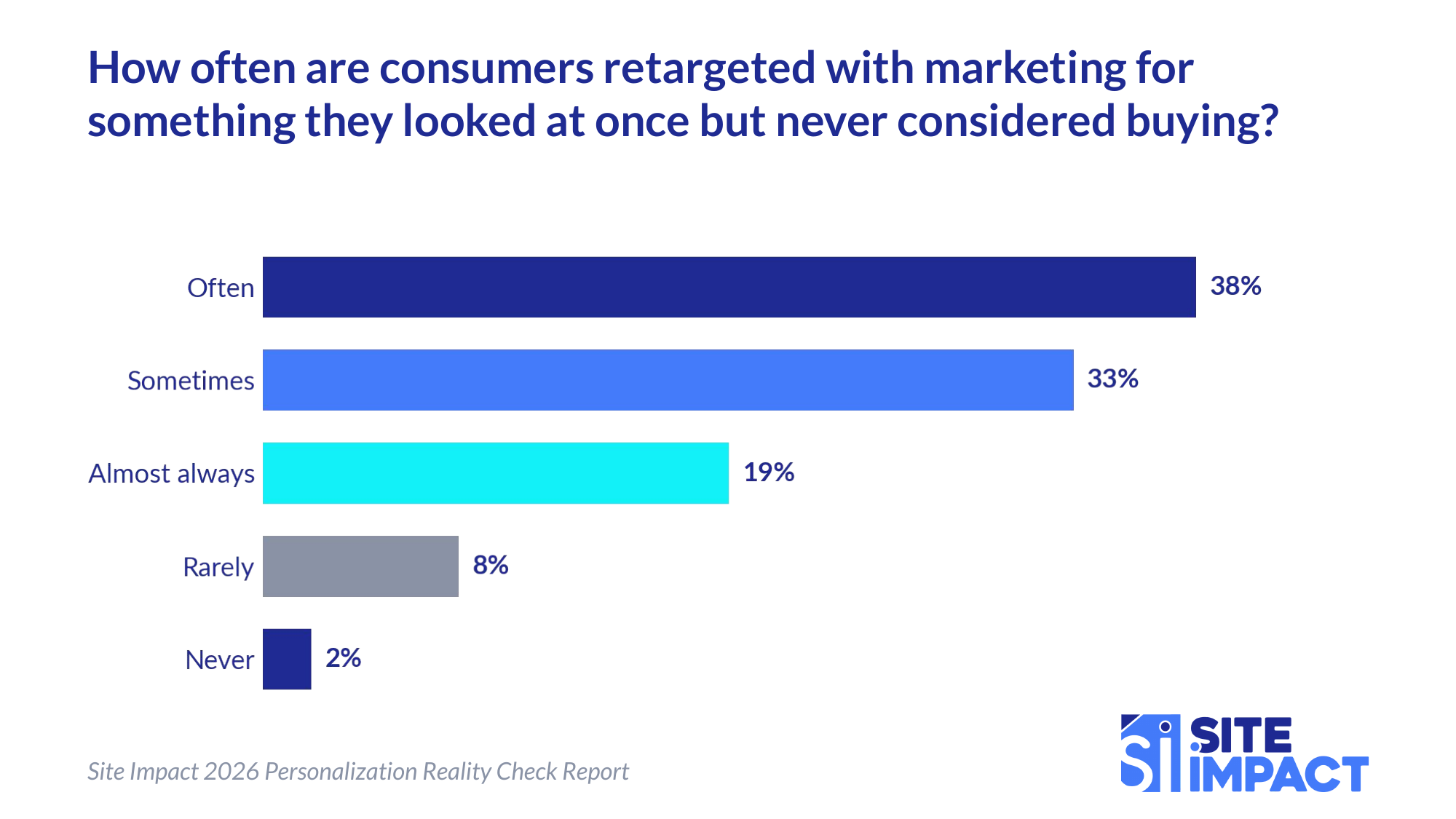
57% of consumers are regularly retargeted with marketing for something they looked at once but never seriously considered buying.
57% of consumers say they almost always (19%) or often (38%) see retargeted messages for products they looked at once and never seriously considered buying.
The top frustration, cited by 26%, is that brands assume one search means interest forever. Marketing that follows people everywhere online and messages repeated too many times tie for second at 21% each.
Specific targeting makes most consumers uncomfortable
55% of consumers feel uncomfortable when targeted marketing references something specific about them, like a recent search or a place they visited.
55% of consumers feel discomfort when marketing references something specific, like a recent search, a place visited, or a purchase just made: 26% mildly unsettled, 19% creeped out, 10% angry. On the other side, 31% accept it as just how marketing works now, and 13% are impressed.
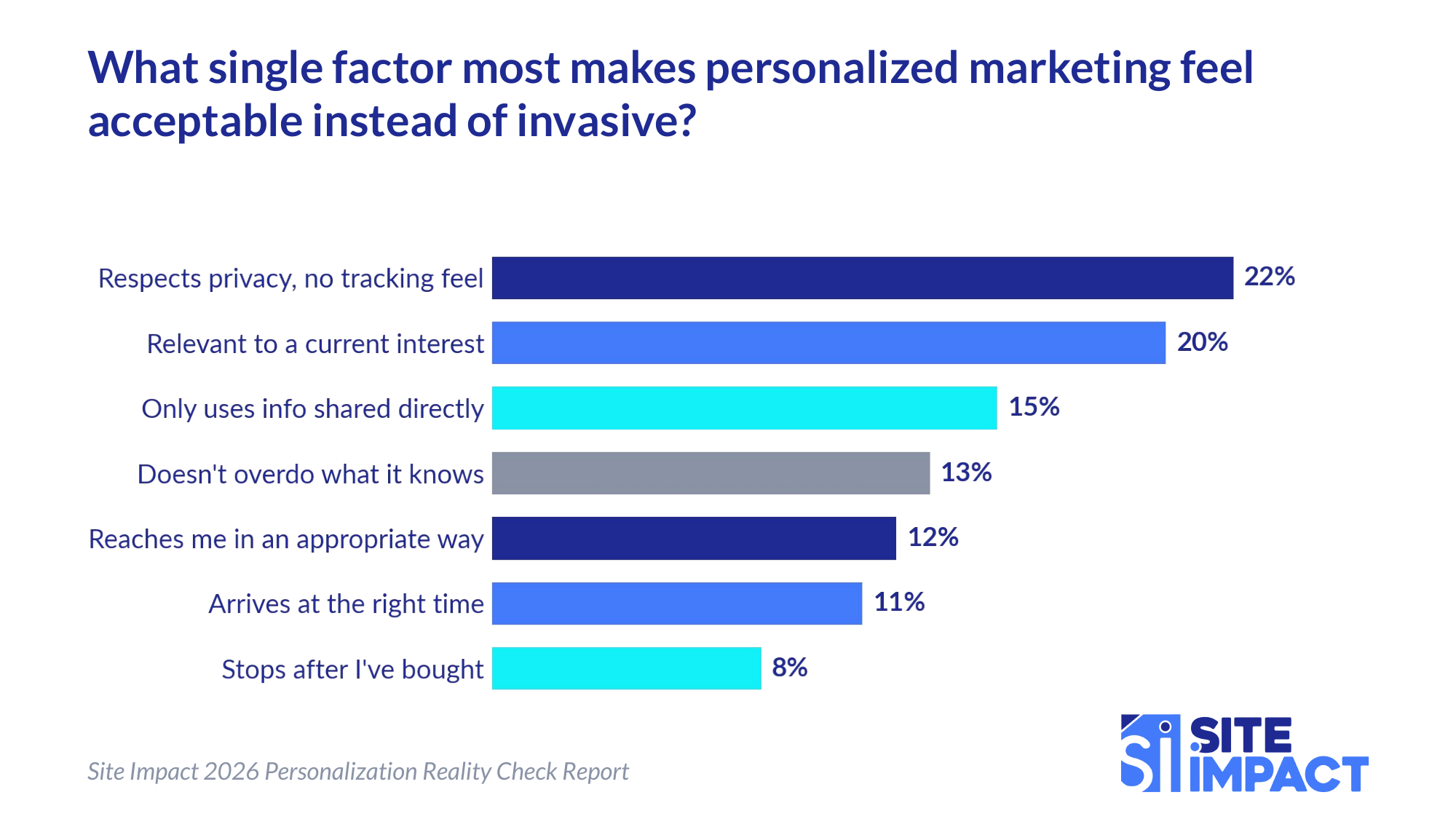
The single factor that most makes a targeted message acceptable, at 22%, is that it respects privacy and doesn't make people feel tracked, just ahead of relevance at 20%.
Seeing the same message everywhere feels invasive
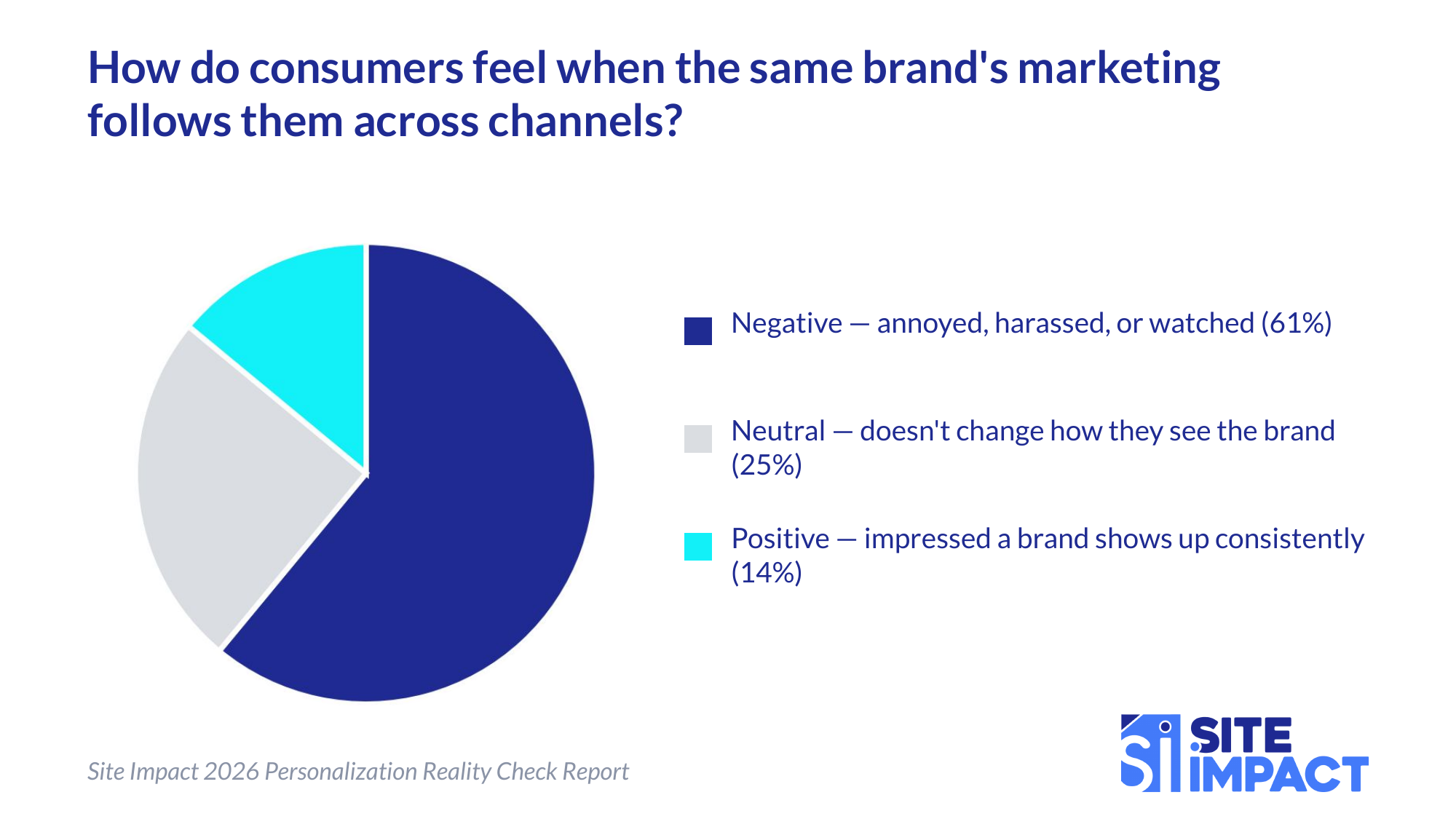
61% of consumers react negatively when the same brand's marketing follows them across social media, websites, and email.
61% of consumers react negatively to cross-channel repetition, saying it's annoying, feels like harassment, or feels invasive. 25% are neutral, saying it doesn't change how they see the brand. Just 14% respond positively, impressed that a brand shows up consistently.
Consumers are not rejecting coordinated campaigns altogether. The problem is overexposure without a meaningful change in message, timing or context.
AI-powered personalization still has to prove its value
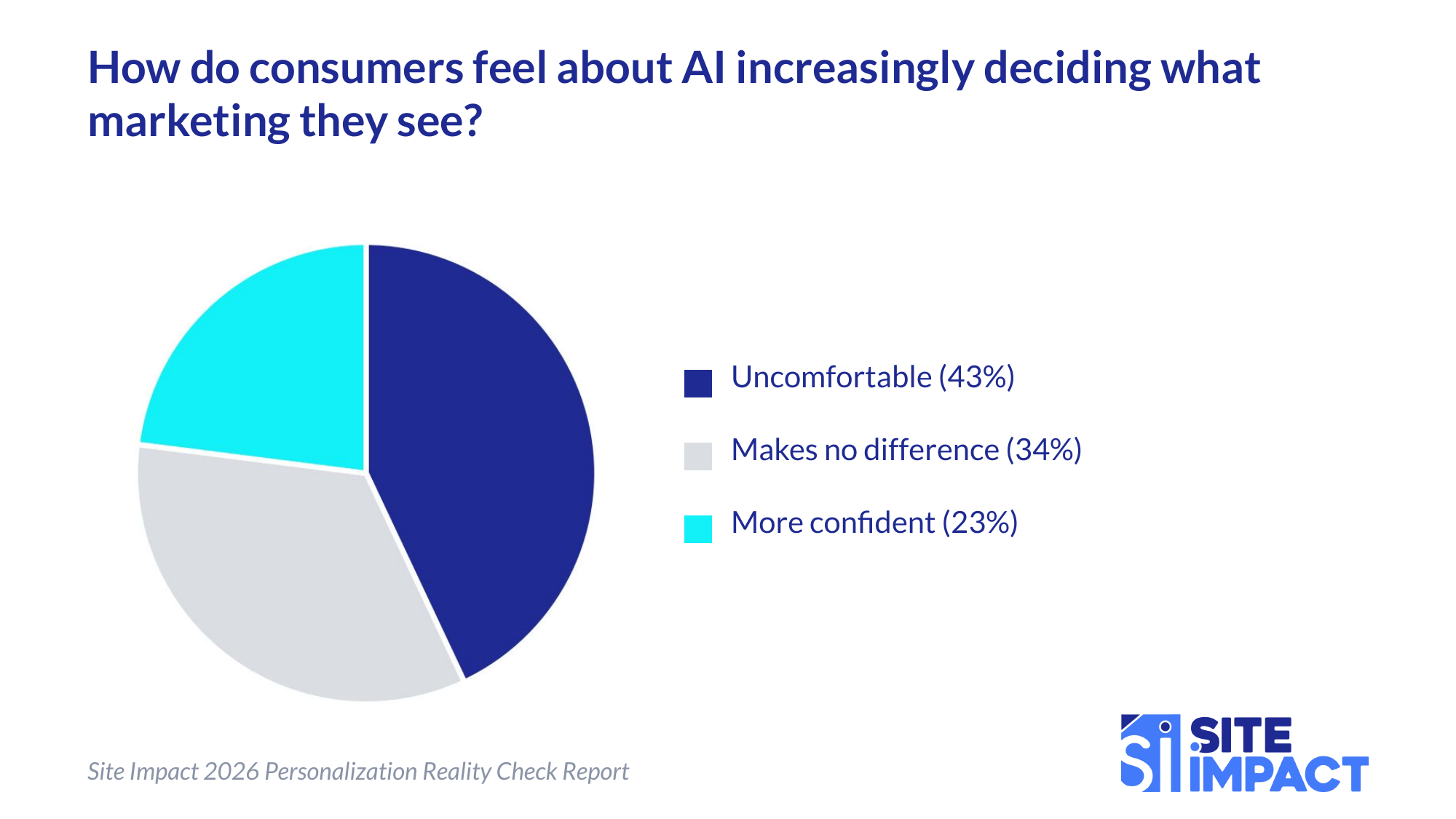
43% of consumers are uncomfortable knowing AI increasingly decides which recommendations they see.
43% of consumers are uncomfortable knowing AI increasingly helps choose the marketing messages and recommendations they see. 34% feel no different, and 23% feel more confident that what they see will be relevant.
The mixed response suggests AI still has to earn trust in personalized marketing. As more targeting decisions become automated, consumers will judge AI by the quality of the experience it creates, not the technology behind it.
Bad personalization drives consumers to abandon brands
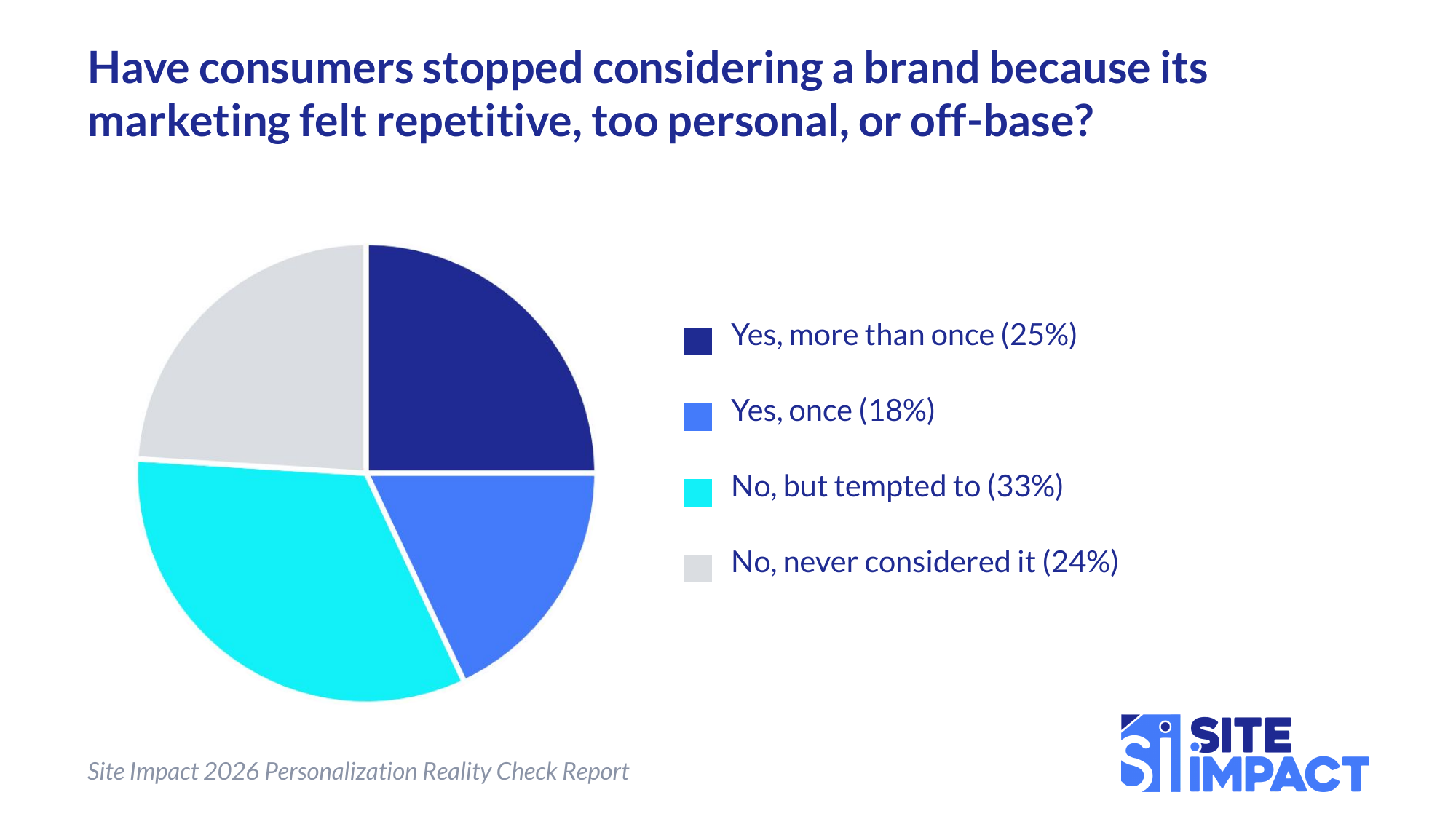
43% of consumers have stopped buying from a brand over personalized marketing that felt repetitive, too personal, or off-base. Counting those tempted to, it's 76%.
43% of consumers have stopped considering or purchasing from a brand because its marketing felt repetitive, too personal, or off-base: 25% more than once, 18% once. Another 33% haven’t abandoned their shopping carts completely, but have been tempted to walk away.
When marketing becomes annoying, most people tune it out and ignore it (48%), block or hide the ads (41%), or unsubscribe (40%). But 17% stop buying outright and 15% tell friends and family.
Good personalization can still drive purchases
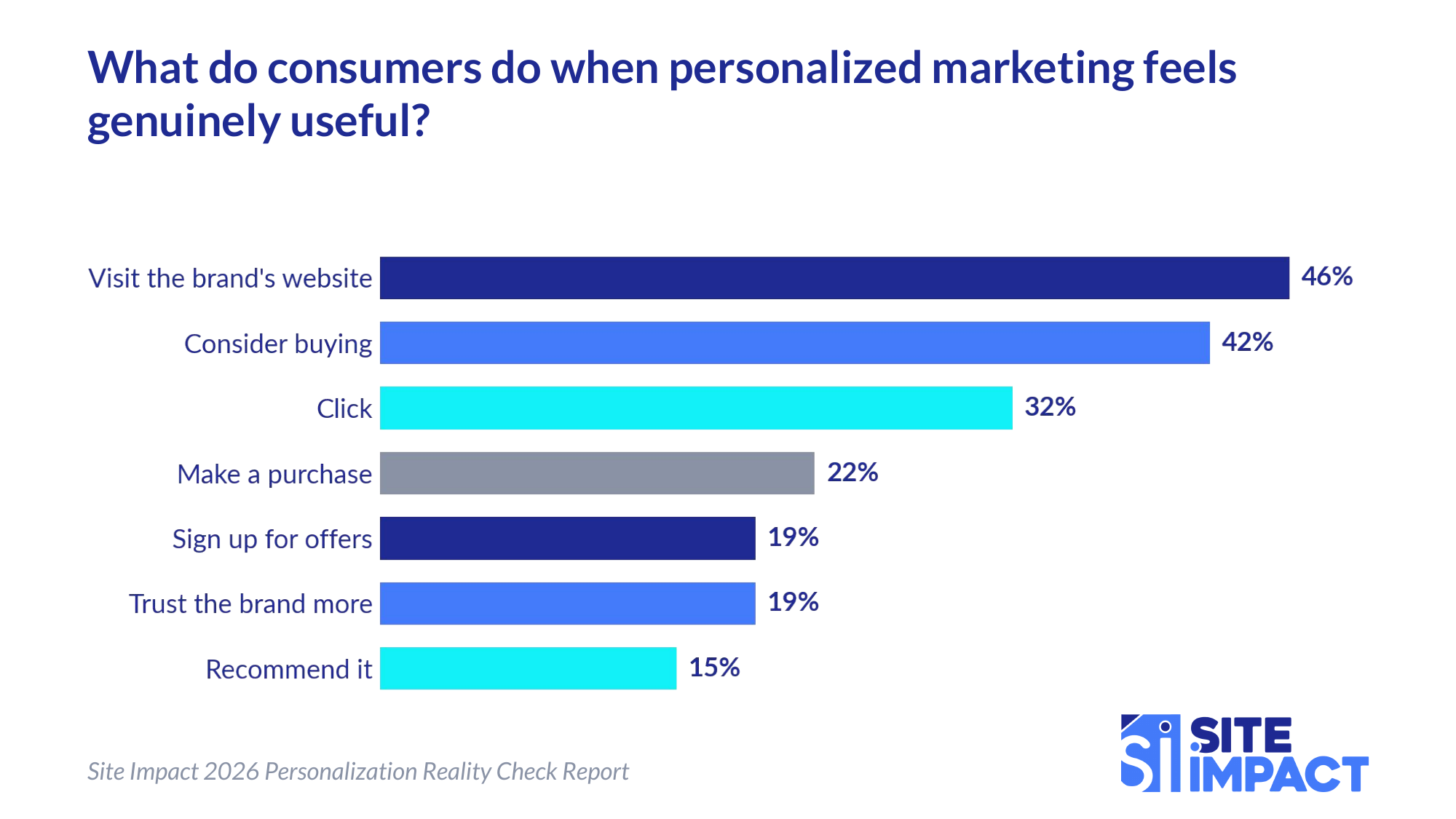
When personalized marketing feels genuinely useful, 46% of consumers visit the brand's website and 42% consider buying.
When personalized marketing does fit and feels useful, consumers act: 46% visit the brand's website, 42% consider buying, 32% click, and 22% make a purchase. 52% say marketing influences what they buy at least sometimes.
The most appreciated marketing recommendation, named by 41% of respondents, is a discount on something they'd already been researching, well ahead of a product similar to a past purchase (20%) or a recommendation based on their hobbies (16%).
Gen Z is the most receptive and most reactive generation
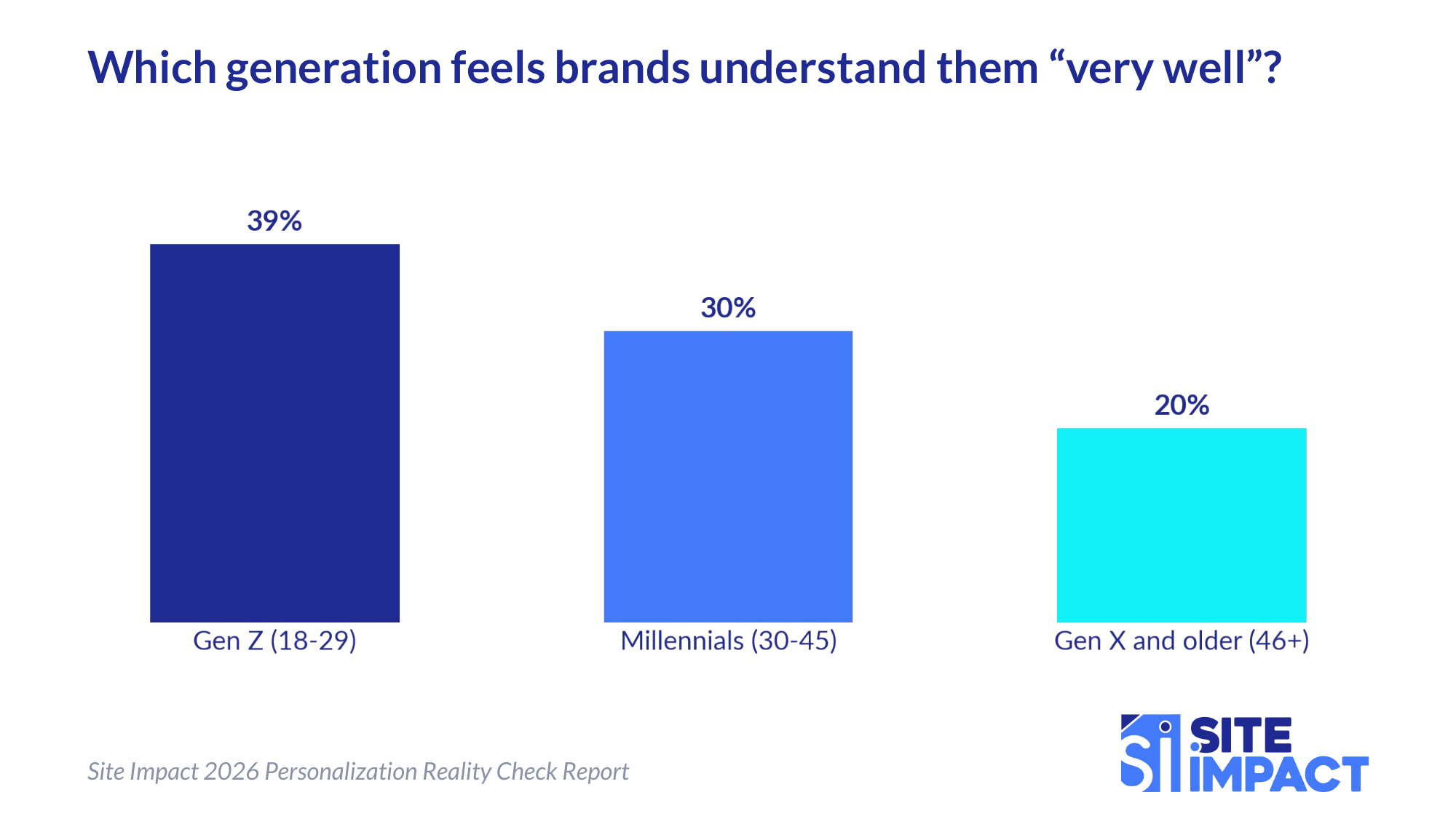
39% of Gen Z say brands understand them "very well," nearly double the 20% of Gen X and older, but Gen Z is the quickest to walk away when personalization misses.
39% of Gen Z (18-29) say brands understand them "very well," compared with 30% of Millennials (30-45) and 20% of Gen X and older.
Gen Z is also the most reactive. Compared with Gen X and older, they're far more likely to stop buying over bad marketing (29% vs. 16%), change privacy settings (29% vs. 15%), and recommend a brand whose marketing works (25% vs. 9%). Older consumers are harder to win over: 33% of Gen X and older say marketing rarely influences what they buy, compared with 24% of Millennials and 22% of Gen Z.
How brands can respond
The findings point to a practical takeaway for brands. Better personalization depends less on collecting more signals and more on using the right signals with discipline.
Consumers respond when marketing reflects where they are now. They pull away when brands rely on outdated assumptions, repeat the same message too often or continue targeting after interest has passed.
“Personalization only works when the data reflects where the consumer is today. One interaction rarely tells the whole story. A search, a click or a site visit can signal interest, but it doesn't automatically mean someone is ready to buy. When brands continue marketing based on outdated or incomplete information, consumers experience it as noise rather than relevance. The future of personalization isn't collecting more data. It's using better, permission-based data with enough discipline to know when to engage, when to adjust and when to stop. Consumers don't reward brands for knowing everything. They reward brands for getting the moment right.”
– Jennifer Gressman, CEO, Site Impact